
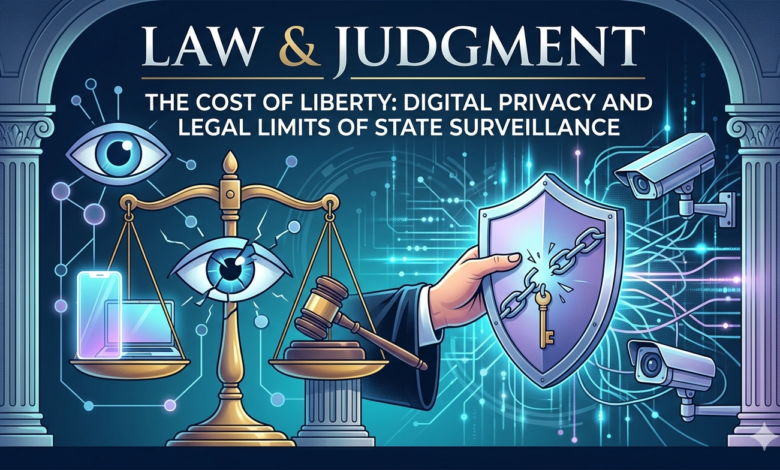
In the digital era, the boundaries of constitutional freedoms are no longer defined just by physical walls, but by encryption keys and data servers. For legal columns and courts worldwide, a recurring, complex dilemma has taken center stage: How do we strike a perfect balance between national security and an individual’s fundamental right to privacy?
A series of recent judicial pronouncements have significantly reshaped this landscape, drawing a firm line against state overreach. The courts have increasingly stepped in to scrutinize the unchecked extraction of personal data, state-sponsored malware deployments, and the forced seizure of digital devices without clear, structured warrants.
Historically, investigative agencies enjoyed broad discretion under older penal laws to seize “documents or things” during active probes. However, modern judiciaries are progressively recognizing that a smartphone or a personal laptop is fundamentally different from a physical file cabinet. A digital device serves as an extension of the human mind – containing an absolute repository of an individual’s financial, medical, and deeply personal life.


In several landmark assessments, courts have ruled that forcing an accused individual to unlock their phone via biometrics or passcode directly violates the constitutional protection against self-incrimination. The core legal takeaway is clear: the state cannot use investigative powers as an excuse to conduct unrestricted “fishing expeditions” through a citizen’s private digital footprint.
How K J George Emerged as the Key Peacemaker Between D K Shivakumar and Siddaramaiah
Furthermore, judges are strictly enforcing the principle of proportionality. For any surveillance or data seizure to be legally valid, the state must conclusively prove three things:
-
The action is backed by a specific, clear law.
-
It serves a legitimate, necessary state aim (such as preventing an imminent threat).
-
The intrusion is the least restrictive means available to achieve that goal.
For legal practitioners and corporate houses alike, these judgments signal a massive paradigm shift. Compliance frameworks must evolve rapidly. Businesses can no longer treat user data data-sharing requests from authorities casually; they must insist on formal judicial orders.
Ukraine Sanctions Foreign Firms Supplying Components for Russian Missiles and Drones
Ultimately, these rulings reinforce a timeless legal truth: technology may change, but fundamental liberties do not. The judiciary’s proactive stance serves as a vital reminder that an efficient criminal justice system cannot thrive at the expense of a citizen’s dignity and privacy. Security is undoubtedly essential, but a democratic society must never allow the tools of investigation to transform into instruments of digital surveillance.